How to Grow on Facebook as a Creator in 2026: Reels, Groups and Monetization That Actually Works
Facebook has 3 billion users, the least creator competition, and programmes that pay you to post — yet most creators ignore it. This guide covers the algorithm, Groups, repurposing, and how creators honestly earn on Facebook in 2026.
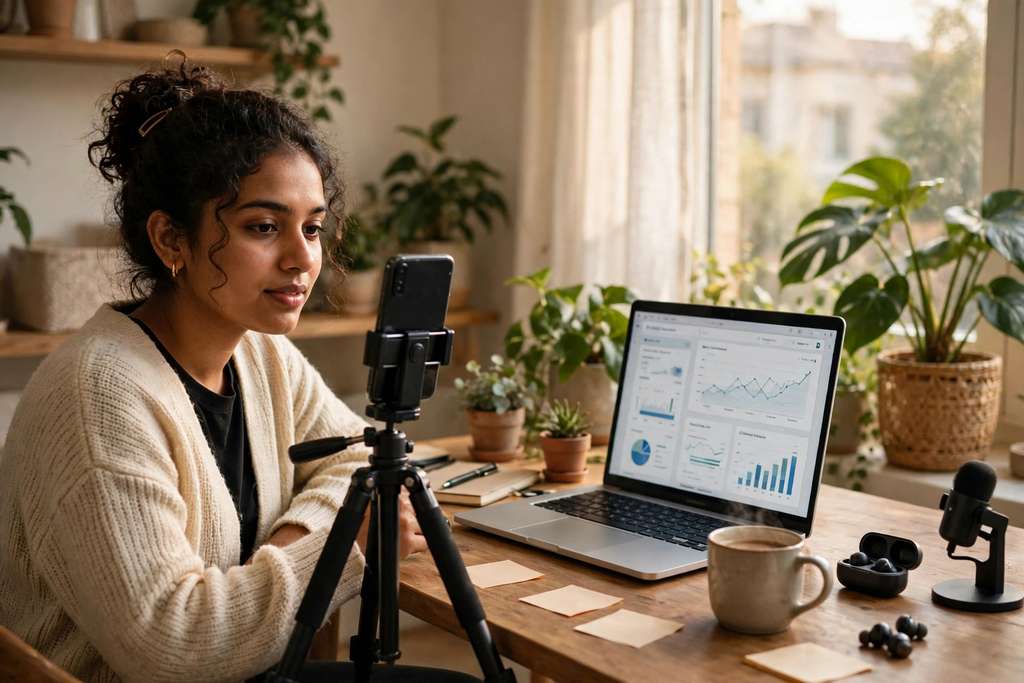
Ask a room of creators where they grow in 2026 and you will hear TikTok, Instagram, YouTube Shorts — almost never Facebook. That is exactly the point. Facebook has more than three billion monthly users, it is actively paying creators to post short-form video, and most creators still treat it as a place for family photos. The platform with the biggest audience and the least creator competition is the one being ignored. If you already make short-form video anywhere else, Facebook is the lowest-effort expansion of your audience you can make this year.
This guide covers how to grow on Facebook as a creator in 2026 the way it actually works: how the feed and Reels algorithm ranks content, how to set up your Page and Professional Dashboard, the content mix that earns reach, the Groups lever no other platform has, and — honestly — how creators earn on Facebook, because the monetization story has changed twice in the last year and most articles still quote the old programmes. Start with the truth and the strategy falls into place.
Why Facebook still matters for creators in 2026
Three facts explain the opportunity. First, the audience: more than three billion monthly users, the largest social audience on earth, and an audience that skews older than TikTok or Instagram. For niches like home improvement, finance, parenting, cooking, fitness over 35 and local business, Facebook is where the buying power actually sits. Second, the competition: a fraction of the creators fighting for attention on TikTok or Instagram have built a real Facebook presence, so a good Reel still reaches strangers instead of drowning. Third, the money: Meta is actively subsidising Reels supply because it needs short-form video to compete — in March 2026 it launched Creator Fast Track, a programme that boosts reach on eligible Reels and guarantees three months of pay for posting them.
Facebook also fits creators who already make content elsewhere. You do not need to create anything new for it. Your existing Instagram Reels, TikTok videos and YouTube Shorts can be cross-posted with minimal changes — remove watermarks, adjust the caption, sometimes re-crop. Facebook's algorithm does not penalise recycled content the way TikTok's does, and Meta's recommendation system is now unified, so a Reel that performs on Facebook frequently shows up in Instagram's Explore too. One shoot, one edit, three platforms — and the Facebook version is the one with the least competition.
One warning before the strategy: do not treat Facebook as a dumping ground for your other platforms. The creators who grow fastest post natively, in the platform's own voice, and talk with people instead of broadcasting at them. Facebook's audience rewards usefulness over pure entertainment — practical tutorials, before-and-after transformations, money advice and local content travel further there than edgy hot takes. Adapt your voice for the audience and the algorithm will do the rest.
How Facebook's feed and Reels algorithm works in 2026
Facebook ranks content on a small set of signals, and understanding them beats guessing. Retention is the dominant signal: watch time and completion rate decide whether a Reel gets pushed to strangers. The first two seconds matter most — Reels autoplay in the feed, so your first frame and first line must stop the scroll with a bold claim, a visual movement or a question. The second signal is shares: a share tells Facebook the content was worth passing on, and it carries more weight than a like. The third is conversation — comments and replies, especially inside Groups, where the algorithm treats engagement as highly relevant.
Replays are a signal most creators ignore. Facebook's Professional Dashboard shows you a Reels-specific metric for replays, and high replays mean your content loops — looping content gets pushed harder. A Reel that ends where it begins, so the viewer watches it twice without noticing, is worth more than a Reel with a clean ending. And because many Facebook users watch on mute in public or with sound off by default, burned-in captions are not optional — they are the difference between a Reel that gets watched and one that gets scrolled past.
Practically, this means your posting rhythm matters more than any single post. Three to five Reels a week is a solid cadence for most creators, and Facebook rewards consistency with distribution. The algorithm also needs a few weeks of steady posting to calibrate what your content is about and who should see it. Treat the first month as a three-month experiment, not a three-post test: the creators who see results are the ones who post through the quiet weeks instead of quitting after ten uploads.
Set up your Page and Professional Dashboard the right way
Growth on Facebook runs through a Page, not just a personal profile, and monetization runs through the Page too. Complete the Page properly before you post anything: a clear bio that says who you help and with what, a recognisable profile photo, and one link that routes visitors to the place you actually make money — your YouTube channel, newsletter or shop. Facebook also lets you turn on Professional Mode on a personal profile, which unlocks creator tools and monetization features without a separate Page; either route works, but pick one home base and build it properly instead of splitting your effort across two half-finished presences.
Open your Professional Dashboard on day one and check the Monetization tab. This is the only reliable source of truth about what you can earn, because availability changes by country and by account, and reading an outdated blog post instead of your own dashboard is how creators waste months waiting for a programme that was never open to them. While you are there, set up your payout information early — add your bank or PayPal details plus your tax information. If payout is not set up, your earnings do not qualify, and several creators have discovered months of views that never paid because this step was left for later. You are typically paid monthly, around the 21st of the next month, once you cross the minimum payout threshold, which varies by country.
Connect your Instagram and Facebook accounts as well. Crossposting is easier, and combined insights give you a fuller picture of how your short-form content performs across both platforms. If you also grow on X, our guide to growing and earning on X (Twitter) in 2026 shows how the two text-and-video platforms compare — including X's creator revenue share, which works very differently from Facebook's invite-only system.
The content mix that grows a Facebook audience
Facebook audiences skew older and more action-oriented than TikTok's, and the formats that overperform there reflect that. Tutorials and how-tos earn the most saves and shares — the two heaviest signals — because a Facebook user who learns something useful passes it on. Before-and-after transformations (home renovations, weight loss, garden makeovers) work because the payoff rewards watching to the end. Money content — budgeting, side hustles, retirement basics — performs strongly with an audience that has income to manage. Parenting and family content, local and community content, and faith, food and fitness over 30 all find their natural audience here.
That does not mean other niches cannot grow on Facebook. It means the format beats the niche for the first few months: hooks, captions and consistency outperform topic choice until the algorithm learns who your audience is. Mix four formats across your week. Reels are your discovery engine — 15 to 60 seconds, hook in the first two seconds, captions burned in. Facebook Live is your loyalty engine — regular Lives build the audience that tips, subscribes and buys, and Stars are most commonly sent during live streams. Text posts and photos still earn real distribution on Facebook in a way they no longer do on Instagram, and they are the cheapest content you can make. Longer videos (three minutes and up) earn their keep through mid-roll ads once you qualify for in-stream placements, because watch time is higher than on a 30-second Reel.
Study your analytics weekly in the Professional Dashboard: reach, replays, average watch time and follows per Reel. Double down on the formats with the highest replay rates and retire what flops. If you also sell on Instagram, our guide to selling on Instagram without a website covers turning a social audience into sales — the same offer converts well to a Facebook audience that is already in buying mode.
Facebook Groups: the growth lever no other platform has
Groups are Facebook's superpower, and the one distribution channel Instagram and TikTok cannot offer. Groups are built around shared interests, and members are pre-warmed — they already trust the group's vibe, and the algorithm treats in-group engagement as highly relevant. A Reel shared into the right Group reaches an engaged, niche audience that the feed algorithm would take months to surface for you.
The play is simple, but it only works if you respect it. First, join 10 to 20 active Groups in your niche and spend a couple of weeks contributing genuinely — answer questions, comment, be useful, and never dump links. Second, share your best Reels natively into the Groups where they solve a problem members actually have, and only where the group's rules allow it. Third, consider starting your own Group once you have a small audience: a Group you run is an audience you own, not one rented from the algorithm, and it becomes the natural home for your most loyal followers, your Lives and your offers.
Groups also change the economics of your content. Group members share more than feed viewers, and shares are the heaviest distribution signal Facebook has. A single Reel that lands in three active Groups can outperform a week of feed-only posts. Feed-only distribution leaves the platform's best growth lever unused — and it is the lever your competitors on TikTok do not have at all.
The repurposing play: one video, three platforms
The honest math of Facebook growth is that you should not be creating new content for it at all in the beginning. You should be repurposing. Take the short-form video you already make, strip the watermark, adjust the caption for Facebook's audience, and re-upload natively. Facebook does not penalise reposts the way TikTok does, but it does reward native-looking content — so spend the ten minutes to download, clean and re-upload properly instead of auto-crossposting with an Instagram watermark and an awkward crop. A scheduling tool that strips watermarks is worth the small cost if you post daily.
Repurpose with intent, not on autopilot. A TikTok video that opens with an edgy hook may need a warmer, more practical opening for Facebook's audience. A Reel that performed well on Instagram can be re-cut with a different first two seconds and a Facebook-specific caption that asks a question your audience is already arguing about in their heads. And never put a link in the post itself: Facebook, like Threads, deprioritises posts that push people off the platform. Keep the link in your Page bio or in a comment under the post, and let the post itself be worth reading.
The strategic read is simple. TikTok is where you go to get discovered by a young, massive audience. Instagram is where you turn that attention into a brand. Facebook is where you bank steady reach, an older audience with buying power, and monetization programmes that pay you to post — while doing almost no extra work. The creators winning in 2026 treat Facebook as the compounding asset in a three-platform system, not a replacement for the other two.
How creators actually earn on Facebook in 2026
Here is the honest version, because the monetization story changed and most articles still quote the old programmes. On 31 August 2025, Meta ended In-Stream Ads, Ads on Reels and the Performance Bonus as separate programmes and merged them into one programme: Facebook Content Monetization. It pays for Reels, longer videos, photos, Stories and text posts in one system, based on qualified views — views that are long enough and engaged enough to count. A view does not qualify if the Reel is shorter than 10 seconds, if someone watched less than 5 seconds, or if it is a repeat view from the same person in one session. In practice only 40 to 70 percent of your views usually qualify, and most creators report roughly $0.30 to $1.20 per 1,000 qualified views for Reels — modest, and it varies wildly by niche and geography.
Content Monetization is currently invite-only, and there is no published follower minimum — you express interest in your Professional Dashboard under Monetization, then Content Monetization, then I Am Interested, and Meta notifies you if you become eligible. That makes it a poor first goal for a new creator. The realistic first income is Stars: viewers buy Stars and send them during your Reels and Lives, and Facebook pays $0.01 per Star. You need 500 followers for 30 days in a row and to be 18 or older, and you need at least 10,000 Stars ($100) to cash out. Go Live regularly and acknowledge people who send Stars by name during the stream — fans who tip once tend to tip again.
Fan Subscriptions are the next rung: a monthly subscription that gives fans exclusive content, badges and access. The requirements are steeper — 10,000 followers or 250-plus return viewers, plus strong engagement, and in the last 60 days either 50,000 post engagements or 180,000 minutes watched. Start with a price around $4.99 a month and create subscriber-only content that maps to a recurring promise, like a weekly tutorial series. Brand deals are usually the largest income source for established Facebook creators: brands work with creators as small as 1,000 followers when engagement is high, and you must tag the brand using Facebook's Paid Partnership label — Facebook takes no cut, the brand pays you directly. Facebook's Brand Collabs Manager, in the Professional Dashboard, lets you build a portfolio brands can find.
| Income path | How it works | Who qualifies |
|---|---|---|
| Content Monetization | Ads on Reels, videos, photos, Stories, text posts; paid on qualified views | Invite-only; express interest in dashboard |
| Stars | Fans tip $0.01 per Star on Reels and Lives | 500 followers for 30 days, age 18+ |
| Fan Subscriptions | Monthly fee for exclusive content and badges | 10,000 followers or 250+ return viewers + engagement thresholds |
| Creator Fast Track | Guaranteed monthly pay for posting eligible Reels | Reported: 100K+ followers on another platform; invite-based |
| Brand deals | Paid Partnership posts; brand pays directly | Any engaged audience; smallest creators from ~1,000 followers |
One more programme deserves a careful mention. In March 2026 Meta launched Creator Fast Track, which creator guides report pays established creators $1,000 a month with at least 100,000 followers on Instagram, TikTok or YouTube, or $3,000 a month above one million followers, guaranteed for three months — provided they post at least 15 Reels on Facebook within 30 days, on at least 10 different days. You cannot apply through a public form; eligibility appears in your Professional Dashboard under Monetization. Treat it as a bonus, not a business model: the durable income on Facebook is the stack — Content Monetization for passive income, Stars and Lives for direct connection, subscriptions for recurring revenue, and brand deals for the largest paydays. A detailed breakdown of every method, checked against Meta's own pages as of 2026, is in this guide to making money on Facebook in 2026, and the Reels-specific playbook is in this Facebook Reels guide for creators.
Five mistakes that stall almost every new Facebook creator
Treating Facebook like TikTok. Same content, but the audience and culture differ. Do not copy TikTok's edgy tone if your Facebook audience responds to warmer, more practical delivery. Adapt the voice and the hook for the people actually watching.
Posting once and quitting. Facebook's algorithm needs a few weeks of consistent posting to calibrate. The creators who see results are the ones who treated it as a three-month experiment, not a three-post test.
Ignoring Groups. Feed-only distribution leaves the platform's best growth lever unused. Groups are where strangers become community, and community is what shares, tips and subscribes.
Re-uploading other people's videos. Since July 2025, Facebook has been very strict about originality. Original means content you filmed or produced yourself — your face, your voice, your story, your commentary, your editing. Re-uploading someone else's video and only adding a border, logo, music or speed change counts as unoriginal, and the penalty can be 90 days for the whole Page, not just one post. You can react to other content, but you must add real value: explanation, context, a different angle or a clear opinion.
Chasing RPM instead of audience. Monetization on Facebook is secondary to audience building. Optimise for reach and followers; the money follows. A creator who optimises for the highest RPM from day one ends up with a small audience and a small cheque, while the creator who builds the audience first has something worth monetizing.
Your first 30 days on Facebook
Week 1 — Set up and listen. Complete your Page, turn on Professional Mode if you use a profile, connect Instagram, and check the Monetization tab to see what is available in your country. Join 10 to 20 Groups in your niche and start contributing. Post three Reels, repurposed from your best existing short-form videos, and watch which ones earn replays.
Week 2 — Find your format. Move to four or five Reels a week. Publish one tutorial, one before-and-after, one question post and one short Live, and see which format earns shares and comments. Keep replying in Groups daily. Pin your best post so far.
Week 3 — Build the system. Start batch-creating Reels in a single session and scheduling them across the week. Add a weekly Live at a fixed time so your audience knows when to find you. Prepare your offer — a lead magnet, a low-priced product or a subscription — and put its link in your Page bio.
Week 4 — Measure and double down. Review your dashboard numbers and identify your three best-performing Reels. Write more of that type, retire what flopped, and share your best Reel natively into the Groups where it solves a real problem. By the end of the month you will know whether Facebook deserves an hour a day from you, and you will have the data to prove it either way.
Facebook vs Instagram vs TikTok: where does it fit?
| Factor | TikTok | ||
|---|---|---|---|
| Monthly users | 3 billion+ | ~2 billion | ~1.6 billion |
| Audience age | Skews 30+ | Broad, skews 18–34 | Skews under 30 |
| Creator competition | Lowest | High | Highest |
| Best for | Practical content, Groups, local reach | Visual brand building | Young audience discovery |
| Monetization | Content Monetization, Stars, Subs, Fast Track | Bonuses (invite), Subs, brand deals | Creativity Program, LIVE gifts |
| Repurposing | Welcomed, no penalty | Tolerated with native upload | Penalizes watermarked reuse |
The smart play is not to choose one platform but to use each for what it does best. Facebook is your compounding asset: steady reach, an older audience with buying power, and monetization programmes that pay you to post while you do almost no extra work. Instagram is where the visual proof and the established brand deals live. TikTok is where you get discovered by a young, massive audience. A creator who writes and films once, then distributes natively across all three, gets three audiences from one idea — and Facebook is the one where the least competition is waiting.
Frequently asked questions
How many followers do I need to make money on Facebook?
There is no single number, because the programmes have different thresholds. Stars, the most realistic first income, needs 500 followers for 30 days in a row. Fan Subscriptions need 10,000 followers or 250-plus return viewers plus engagement thresholds. Facebook Content Monetization is invite-only with no published follower minimum. And brand deals can start at around 1,000 followers if your engagement is high. Build the audience and the offer in parallel instead of waiting for one magic number.
Does Facebook pay creators for Reels views?
Yes, through Facebook Content Monetization — but only for qualified views, and only if you are invited into the programme. A view qualifies if the Reel is at least 10 seconds long and someone watched at least 5 seconds. Most creators report roughly $0.30 to $1.20 per 1,000 qualified views, and only 40 to 70 percent of views usually qualify. Treat it as a supplement to your income, not the reason you start.
Should I cross-post my Instagram Reels to Facebook?
Yes — but do it with intent. Auto-crossposts can carry Instagram watermarks and awkward crops, so spend ten minutes to download, clean and re-upload natively. Facebook does not penalise reposts, but it does reward native-looking content, and the audience responds better to a caption written for Facebook than one copied from Instagram.
Are Facebook Groups really worth the effort?
Yes — they are the one growth lever Instagram and TikTok cannot offer. Group members are pre-warmed by shared interest, they share more than feed viewers, and the algorithm treats in-group engagement as highly relevant. Join 10 to 20 Groups, contribute genuinely for a couple of weeks, then share your best Reels where they solve a real problem. It is the fastest way to reach strangers who already care about your topic.
Conclusion
Growing on Facebook as a creator in 2026 is a repurposing game with a community twist: a complete Page, three to five Reels a week with hooks in the first two seconds and captions burned in, genuine contribution in Groups, and thirty days of consistency before you judge the result. The monetization is real but layered — Stars first, subscriptions next, Content Monetization by invitation, and brand deals where the largest paydays live — so build the offer alongside the audience instead of waiting for an invite that may never come. The platform with the biggest audience and the least creator competition is sitting open. Pick your niche, fix your Page, post your first Reel today, and let the Groups do the growing.
Related Marketplace Assets
AI Instagram Caption Generator
Generate 3 distinct styles of engaging Instagram captions with hooks, emojis, and conversation-starting CTAs.
AI Smart Hashtag Generator
Discover targeted, tiered hashtag groups categorized into broad high-reach, niche-specific, and community tags.
AI Social Media Post Generator
Generate engaging, platform-aware social media posts formatted with clean spacing, strong hooks, and closing prompts.