AI-Generated Art for Sale: Copyright, Platform Rules, and Safe Selling
Selling AI-generated art? Know the real copyright situation, how Etsy, stock sites, KDP and POD platforms each treat AI content, the trademark trap in prompts, and a safe-selling checklist.
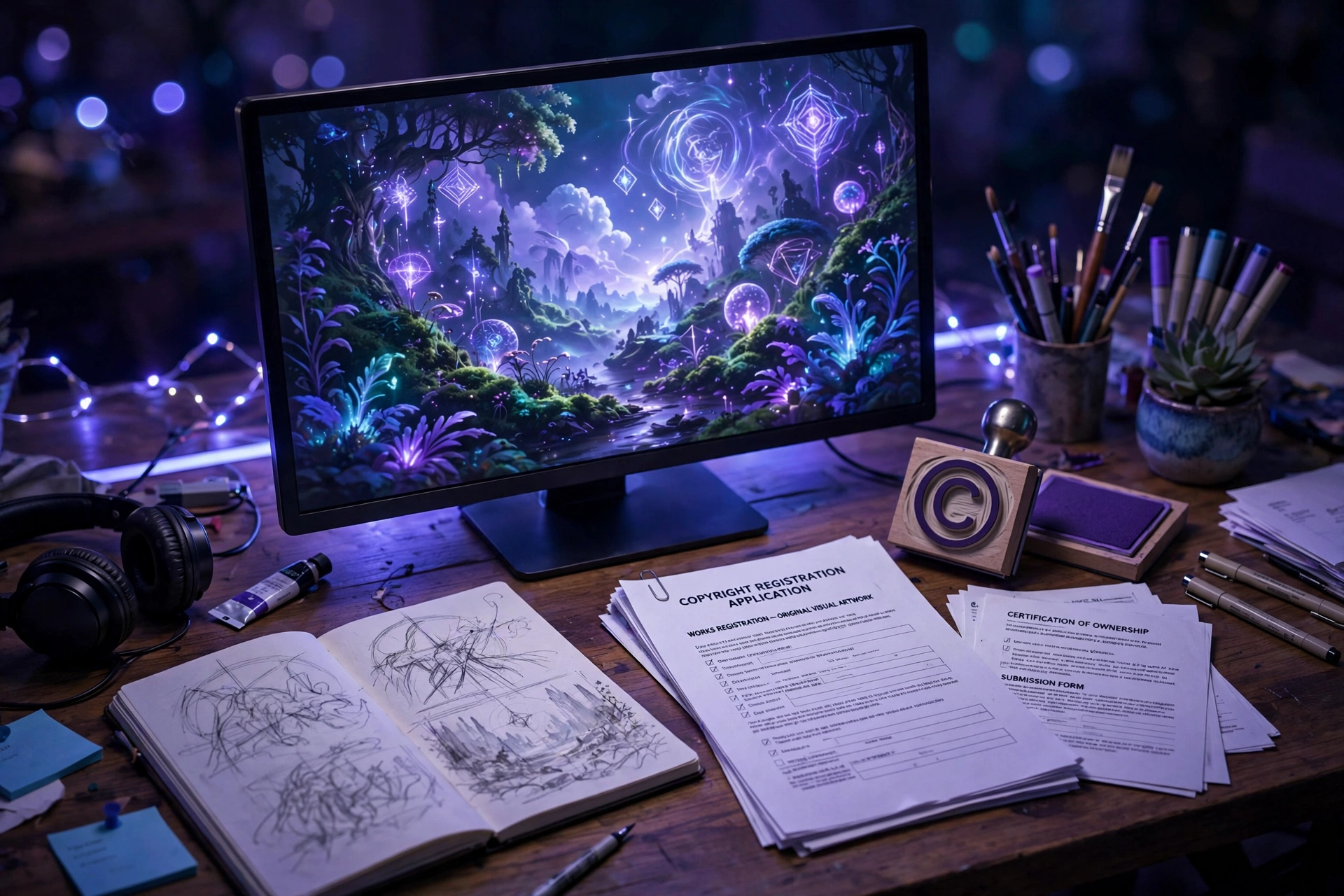
AI image generators turned anyone with a prompt into a prolific artist overnight — and marketplaces filled with AI-generated prints, stickers, coloring pages, and wall art. But selling AI art sits at a messy intersection of copyright law, platform policies, and buyer expectations. Get it wrong and your listings get removed, your account flagged, or worse.
This guide gives you the honest picture: who actually owns AI-generated art, how the major platforms treat it differently, what you must disclose, and a checklist for selling it safely.
Who Owns AI-Generated Art? The Real Answer
The uncomfortable truth: in most jurisdictions, purely AI-generated images have no copyright protection because copyright requires human authorship. The US Copyright Office has repeatedly refused registration for works with no human creative input. India’s position is evolving but leans the same way — the Copyright Act protects works by “authors,” understood as humans.
What this means practically:
- You cannot stop others from copying your raw AI outputs. If you sell an unedited Midjourney image, a competitor can generate something similar — or copy yours — and you have little legal recourse.
- Significant human editing changes the equation. If you substantially transform the AI output — compositing, painting over, creative arrangement — the human-authored portions can be protected. Document your editing process.
- Your prompts are not protected either. Short prompts lack the originality threshold; elaborate prompt systems might qualify as literary works, but this is untested.
None of this makes selling AI art illegal — it just means your moat is curation, editing, and branding, not ownership of the raw image.
Platform Rules Compared
Each marketplace has its own stance, and they change often. As of 2026, the landscape looks like this:
| Platform | AI art allowed? | Key rule |
|---|---|---|
| Etsy | Yes, with conditions | Must disclose AI involvement in the listing; mass-produced-feeling shops face extra scrutiny under handmade policies |
| Gumroad | Yes | Permitted, but you must have rights to sell what you list — which circles back to the ownership problem above |
| Adobe Stock | Yes, labeled | Must be submitted as “Generative AI” content; undisclosed AI uploads get accounts banned |
| Shutterstock | Restricted | Has flip-flopped; check current contributor terms before uploading — violations risk your whole portfolio |
| Print-on-demand (Printful, Printify) | Generally yes | Allowed, but trademarked styles/characters in prompts create infringement liability for you |
| Amazon KDP (coloring books etc.) | Yes, disclosed | Must declare AI-generated content at publishing; undisclosed AI content risks account termination |
The pattern is clear: disclosure is the price of admission everywhere. Platforms punish hiding AI use far more than the AI use itself.
What You Must Disclose (and Where)
- In the listing: A plain line like “Created with AI assistance and finished by hand in Photoshop.” Buyers who discover AI involvement themselves feel deceived; buyers told upfront do not care.
- At upload: Use each platform’s AI-content flags and categories. This is non-negotiable on stock sites.
- In commercial licenses: If you sell commercial rights, state clearly that the underlying image may not be copyright-protectable. A buyer building a brand on your art deserves to know.
The Trademark Trap in Prompts
The biggest real legal risk is not copyright — it is trademark and likeness. Prompts like “in the style of [famous artist]” or “featuring [celebrity/cartoon character]” can produce outputs that infringe. Selling those exposes you, the seller, not the AI company. Rules:
- Never use living artists’ names, celebrities, or branded characters in prompts for products you sell.
- “In the style of” is the highest-risk prompt pattern — build your own style references instead.
- Run a reverse-image check on hero products; if the output closely mirrors an existing copyrighted work, do not sell it.
The Safe-Selling Checklist
- Edit every piece meaningfully — your human touch is both your legal edge and your quality edge.
- Disclose AI use in every listing and at every platform upload gate.
- Keep prompt-plus-edit records for your bestselling pieces (proves your creative contribution if ever questioned).
- Read the image generator’s terms: most grant commercial rights to paid subscribers but not free-tier users — your subscription tier matters.
- Avoid trademarked styles, characters, and likenesses in prompts.
- Price for volume and curation, not scarcity — your advantage is taste and output speed, not exclusivity.
- Build a recognizable style or niche (e.g., “botanical AI art for therapists’ offices”) — that brand is the asset no one can copy.
FAQ
Can I copyright my AI art in India?
Pure AI output: almost certainly not. Heavily edited work where you made creative choices: the human-authored elements may qualify. When in doubt, consult an IP lawyer before building a business on the assumption.
Do I need a paid AI subscription to sell commercially?
Almost always yes. Free tiers of most generators grant personal-use-only rights; commercial rights typically require a paid plan. Check your specific tool’s terms — this is the most commonly violated rule.
What sells best: prints, digital downloads, or coloring books?
Digital downloads (wall art packs, seamless patterns, clipart bundles) have the best effort-to-revenue ratio. Coloring books sell well on KDP but the niche is saturated — you need a genuinely fresh theme. Physical prints work only with a strong brand or niche.
Will buyers pay for art they could generate themselves?
They pay for curation, consistency, and convenience — a coherent 50-pack in one style, ready to print, beats 50 random generations. Your job is editor and art director, not just prompter.
Conclusion
AI art is sellable, profitable, and here to stay — but the sellers who last treat it as a craft, not a loophole. Disclose honestly, edit meaningfully, respect trademarks, and build your edge on taste and branding rather than on ownership claims the law will not support. Do that, and AI becomes what it should be: the fastest sketch artist you have ever hired.
Related Marketplace Assets
AI CTA Generator
Craft clear, persuasive calls-to-action tailored for newsletters, digital downloads, video outros, and community growth.
AI Product Description Generator
Generate persuasive, structured sales descriptions for digital products, templates, and courses that convert visitors.
AI Creator Email & Newsletter Writer
Draft personal, high-engagement broadcast emails and newsletter editions with curiosity subject lines and clear CTAs.