How to Start a Faceless YouTube Channel in India: Niche, Tools, and Monetization That Actually Works
A faceless YouTube channel needs no camera and no on-screen host — just a clear voice, honest scripts, and a repeatable weekly workflow. This guide covers niche selection, free AI tools, thumbnails and SEO, and the real Partner Programme rules, including the higher thresholds announced for 2027.
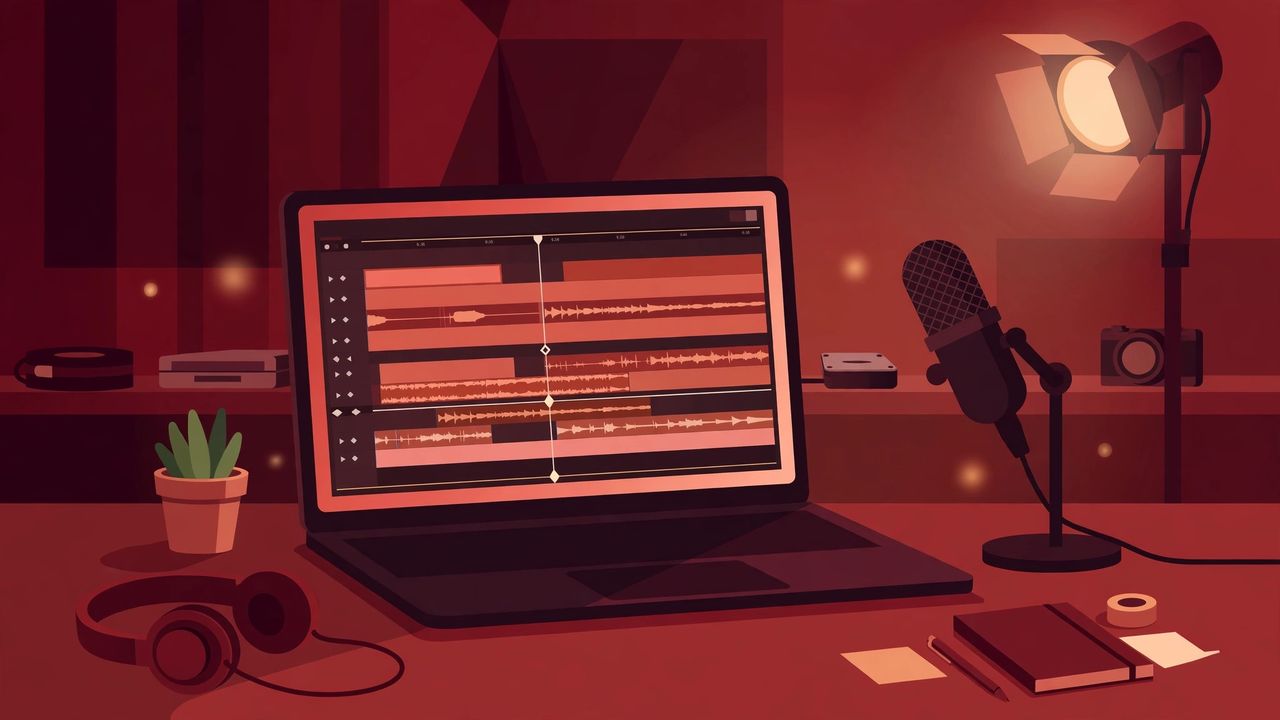
A faceless YouTube channel is a channel where the creator never appears on camera. The videos are built from a voiceover, visuals such as stock footage, AI images, animation or screen recordings, and subtitles. In India, this format has quietly become one of the most practical ways to start on YouTube: there is no camera to buy, no room to light, and no pressure to perform for a lens. What matters instead is a clear voice, a good story, and a workflow you can repeat every week.
This guide explains how to start a faceless YouTube channel the honest way — pick a niche with real demand, set the channel up like a small brand, build a production routine you can sustain, and understand exactly what YouTube requires before it will pay you. There is no shortcut here, and anyone promising income in 30 days is selling you a course, not a channel. But if you can publish useful videos consistently for six months, a faceless channel is a genuine side income.
What exactly is a faceless YouTube channel?
Faceless does not mean anonymous or automated. It means the face is not the product — the information is. The most common formats are narrated explainers (finance, history, science), story-driven documentaries, list-style videos built on stock footage, screen-recorded tutorials, and animated explainers. Indian audiences already watch these formats in huge numbers: finance explainers, mythology retellings, business case studies, and tech news channels often run entirely without a host on screen.
Viewers stay for the same reasons they stay on any video: the first 30 seconds promise something specific, the middle delivers it in a clear order, and the ending pays it off. A face can help with trust, but it cannot rescue a script that rambles, and its absence does not hurt a video that is well written. That is the whole bet of a faceless channel — that clarity beats charisma.
One thing to settle early: a faceless channel is still your channel, with your judgement in it. YouTube's monetisation rules reward original content and penalise mass-produced, low-value uploads. A channel that stitches together other people's clips with a robot voice and no original commentary will struggle to get monetised at all. The face is optional; the original thinking is not.
Step 1: Pick a niche you can make 100 videos about
Niche selection decides three things at once: how fast you grow, how much advertisers pay per view, and whether affiliate or sponsorship income is even possible. Before committing, run the 100-video test. Write down 100 video titles in your chosen niche. If you run out of ideas at 25, the niche is too narrow or you do not care about it enough — either way, you will quit by month two.
Then validate demand on YouTube itself. Search your niche and look for channels with under 100,000 subscribers that still get 50,000 or more views per video. Those channels prove the audience exists and that a small creator can reach it. If every video in the niche comes from a channel with millions of subscribers, the topic is probably too competitive for a new channel.
Some niches that work well for faceless formats in India are personal finance and investing explainers, Indian history and mythology storytelling, business case studies, AI tools and tech news, and education for exams and skills. Finance and business usually earn higher ad rates than motivation or general entertainment, because advertisers in those categories pay more per view — Indian creator guides report finance channels earning roughly two to four times the per-view revenue of general entertainment channels. But a high-paying niche you find boring is a trap: you will produce 40 videos, burn out, and stop. Pick the overlap between what pays, what people search for, and what you can talk about for a year.
Avoid two niches unless you have real expertise: medical advice and personalised financial advice. Both attract extra scrutiny, and a wrong claim in either can do real harm to a viewer. Education and general information are fine; telling a stranger which medicine to take or which stock to buy is not a faceless video idea, it is a liability.
Step 2: Set up the channel like a brand, not a hobby
Create a dedicated Google account for the channel and turn on two-step verification immediately — you will need it later for monetisation, and recovering a hacked channel is far harder than preventing it. Choose a channel name that says what the channel is about, not your nickname: "Market Samajh" tells a viewer more than "Vijay Vlogs 07" ever will.
Design a simple, consistent identity: one logo, one or two fonts, and one colour scheme, used in the channel banner, the thumbnails, and the video intros. Free tools like Canva are enough. Consistency is doing quiet work here — when a viewer sees your thumbnail in a feed for the third time, recognition is what gets the click, and recognition comes from repetition, not from a fancy logo.
Write the About section properly. One or two sentences on who the channel is for, one on what it publishes, and one on how often. Include the main keyword phrase naturally, for example "weekly explainers on personal finance for Indian beginners". This is a small search signal, and it also tells a first-time visitor whether to subscribe in five seconds.
Before you publish anything, record or generate three videos and keep them ready. A channel with one video looks abandoned; a channel with three videos gives a new visitor a reason to stay and subscribe. This backlog also removes the panic of the first upload week.
Step 3: Build a production workflow you can repeat weekly
A faceless video has five stages: research, script, voiceover, visuals, and edit. When the workflow is settled, a 6 to 8 minute video takes about two hours. When it is not settled, the same video takes a whole day and you will dread making the next one. The goal of your first month is not views; it is a workflow that feels boring in a good way.
Start with research, not writing. For an explainer, read two or three reliable sources and note the three facts your video will be built around. For a story, get the sequence of events right before you dramatise any of it. Verifying facts before you write is what separates a channel people trust from one people correct in the comments.
Write the script for the ear, not the page. Short sentences, one idea at a time, and a hook in the first 30 seconds that names a specific outcome. A practical scripting method — payoff first, hook, chained blocks, a re-hook in the middle — is laid out in our guide to scripting videos that hold attention, and it works even better for faceless videos, because there is no presenter energy to cover a weak structure.
For voiceover, your own voice is the best free option: it is authentic, it costs nothing, and viewers connect with it faster than with any synthetic voice. If you prefer not to record, AI voices have become good enough for narration, but two rules apply. First, pick one voice and stick with it, so the channel sounds like one person. Second, YouTube requires creators to label content that is realistically AI-generated, so disclose it in YouTube Studio when asked — hiding it is a policy risk, not a clever shortcut.
For visuals, mix sources rather than leaning on one. Free stock footage libraries cover most B-roll needs; screen recordings work for tutorials; AI images work for stories and concepts that have no footage. Whatever you use, the visuals must follow the script — a viewer notices within seconds when the pictures have nothing to do with the words. And never build a video from other creators' clips without adding substantial original commentary or educational value: that is exactly what YouTube's reused-content policy rejects at monetisation review.
Edit in a free tool such as CapCut or DaVinci Resolve. Cut pauses, add captions, and keep the pacing tight: a new visual or a text pop every few seconds is what keeps a faceless video from feeling like a slideshow. Burn in subtitles — a large share of Indian viewers watch on phones, often with the sound off at first, and subtitles decide whether they unmute.
Step 4: Titles, thumbnails, and a schedule that compounds
The title should contain the exact phrase people search for. "How to invest in a Nifty 50 index fund" will find its audience; "My index fund journey" will not, because nobody searches for your journey. Put the main keyword near the start of the title and keep the promise honest — a title the video never pays off is the fastest way to lose a viewer you just won.
Thumbnails for faceless channels need to work harder, because there is no face to create curiosity. Use three to five words at most, a single clear image, and high contrast so it reads on a phone screen at a glance. Test thumbnails rather than guessing: YouTube's Test & Compare feature lets you run variants against each other, and our thumbnail A/B testing guide explains how to read the results.
The description box is not an afterthought for faceless videos — it is where search finds you. Front-load the keyword, summarise the video in two or three lines, add chapter timestamps for longer videos, and link to one related video. Our guide to descriptions that rank in search gives a structure you can copy for every upload.
Publish two to three videos a week for the first six months. Batch the work: write four scripts in one sitting, record all the voiceovers in the next, then edit through the week. Channels that publish on a steady rhythm give YouTube's systems more chances to test their videos with new viewers, and they give viewers a reason to subscribe — there will be another video on Friday.
Step 5: Monetisation — the real numbers and the real rules
Ad revenue comes through the YouTube Partner Programme (YPP). The current thresholds, as listed on YouTube's official eligibility page, are 1,000 subscribers plus either 4,000 qualified public watch hours in the past 12 months or 10 million qualified public Shorts views in the past 90 days. There is also a lower, earlier-access tier in some countries that unlocks fan funding at 500 subscribers, three public uploads in 90 days, and 3,000 watch hours or 3 million Shorts views. You also need no active Community Guidelines strikes, two-step verification switched on, and an AdSense for YouTube account linked in YouTube Studio.
Two warnings that save people months. First, reaching the numbers only makes you eligible to apply — every channel goes through a review of the channel as a whole, and channels with reused or low-value content are rejected even with the numbers in place. Second, YouTube has announced that from 1 February 2027, new applicants for ad revenue will need 8,000 watch hours or 20 million Shorts views, double the current thresholds. If you are starting now, that deadline is a real reason not to wait: apply while the current bar still applies, and check the official page for the latest numbers before you apply.
Realistic expectations matter more than optimism. Most faceless channels take six to twelve months to reach monetisation, publishing two to three videos a week. Early AdSense income is small — Indian faceless-channel guides report a new monetised channel typically earning a few thousand rupees a month at first, growing as the library of videos grows. The income compounds because old videos keep earning: a video you made in March can still be paying in December.
AdSense is only the first income stream. Finance channels add affiliate links for investing apps, tech channels link to products they review, and channels over 10,000 subscribers start attracting sponsorships. Digital products — a paid guide, a template, a short course — fit faceless channels particularly well, because the audience already trusts the information rather than a personality. Indian faceless channels in finance and business report these streams overtaking AdSense once the channel passes roughly 50,000 subscribers, though that takes a year or two of consistent publishing for most creators.
Mistakes that kill new faceless channels
Five mistakes end most faceless channels before monetisation. First, re-uploading compilations of other people's clips with a music track and no original commentary — YouTube treats this as reused content and it will fail review. Second, publishing AI-voiced slideshows in bulk with no original research: YouTube's systems increasingly flag repetitive, low-value content, and viewers leave within seconds anyway.
Third, changing niche every month. The algorithm cannot find your audience if you do, and neither can your subscribers. Fourth, spending the first month on a logo, an intro animation, and a studio setup instead of on the first ten videos. And fifth, quitting at video 15. The channels that make it are rarely the most talented in month one — they are the ones still publishing in month six, when the first videos finally start getting recommended.
If the channel stalls, diagnose before you quit. Check audience retention in YouTube Studio: a sharp drop in the first 30 seconds is a hook problem, a slow sag in the middle is a structure problem, and low click-through rate is a title and thumbnail problem. Each has a different fix, and guessing wrong wastes a month.
Frequently Asked Questions
Do I ever need to show my face to get monetised?
No. Monetisation depends on meeting the subscriber and watch-hour thresholds, following the monetisation policies, and passing a review of your content. Your face is not part of the criteria. Many large Indian channels in finance, history, and education have never shown a host.
Is using an AI voice allowed on YouTube?
Yes, as long as the content is original and useful, and you disclose AI-generated content when YouTube Studio asks. What gets channels in trouble is not the AI voice — it is mass-produced videos with no original value, or reused footage presented as original work.
How much does it cost to start a faceless channel?
Nothing, if you use free tools: your own voice, a free editor such as CapCut, free stock footage, and Canva's free tier for thumbnails. A paid setup — script help, a realistic AI voice, and a stock or AI video tool — typically costs around two to four thousand rupees a month, and it is optional, not required to start.
How long does it take to earn the first income?
For most new channels publishing two to three videos a week, six to twelve months to reach the Partner Programme, and then a few thousand rupees a month from AdSense at first. Channels that keep publishing see income grow as their video library grows, because older videos keep earning views. Anyone promising income in the first month is selling a dream, not a plan.
Conclusion
Starting a faceless YouTube channel in India in 2026 is genuinely accessible: a laptop, free tools, and a repeatable weekly routine are enough to begin. The work that matters is unglamorous — pick one niche, write honest scripts, keep the same voice and visual style, publish two to three times a week, and learn from your retention graphs instead of guessing. Do that for six months and you will have a real answer to whether the channel works, plus a library of videos that can earn for years. The face was never the hard part. The consistency is.
Related Marketplace Assets
AI YouTube Title Generator
Generate curiosity-driven, high-converting video and article title variations engineered to capture viewer interest.
AI YouTube Description Generator
Craft structured YouTube video descriptions featuring above-the-fold hooks, key timestamps, and clear calls to action.
AI YouTube Script Generator
Generate comprehensive, high-retention YouTube video scripts with visual B-roll cues, pacing markers, and outro CTAs.